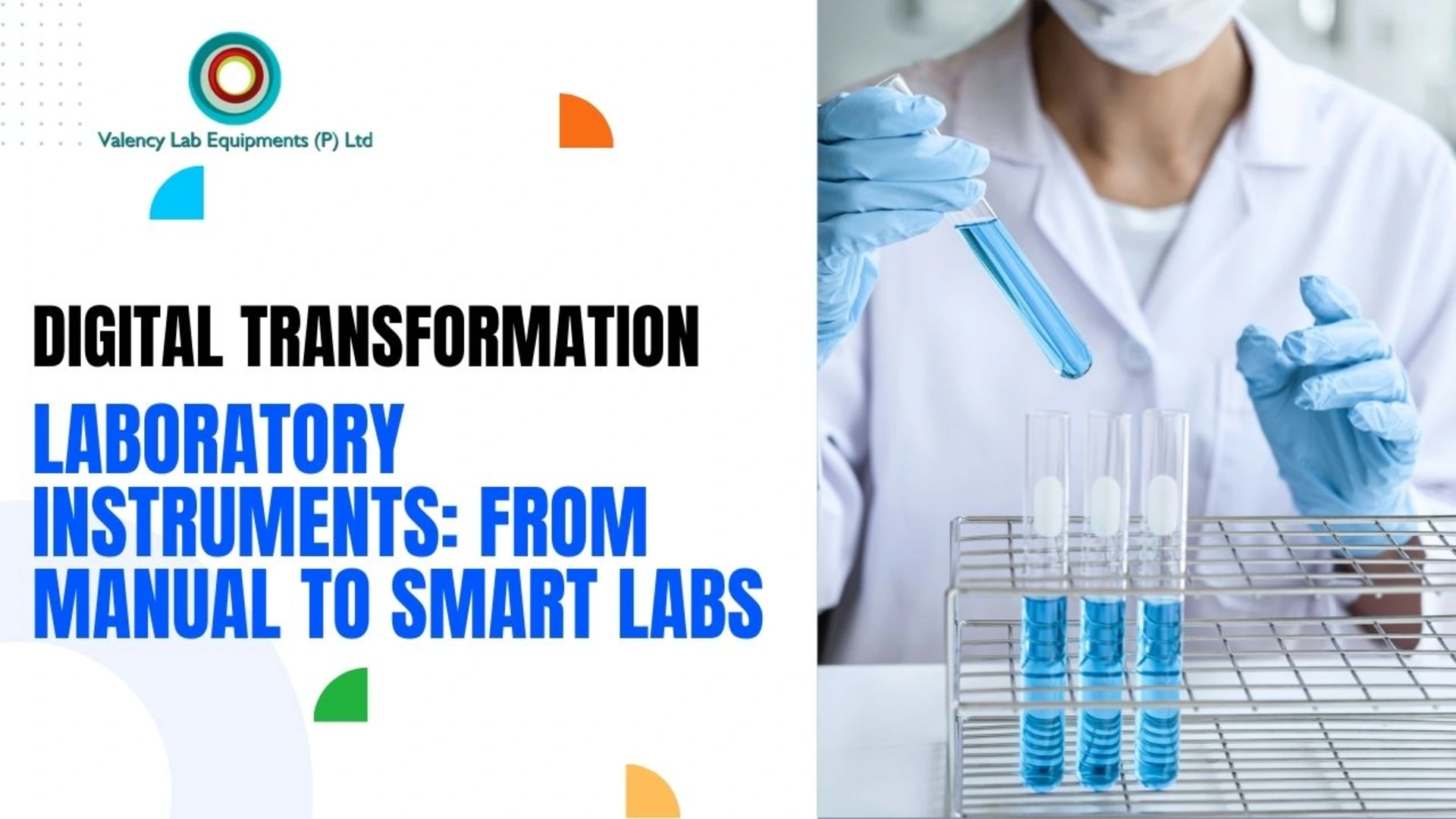
Digital Transformation of Laboratory Instruments: From Manual to Smart Labs
Laboratory instruments are at the center of a major digital transformation that is reshaping how modern laboratories operate, analyze data, and scale operations. As laboratories move away from manual workflows toward automation, IoT-enabled systems, and integrated data platforms, laboratory instrument are no longer standalone tools—they are intelligent assets driving efficiency, accuracy, and compliance.
At Valency Lab, we work closely with laboratories, research centers, and industrial facilities to support this shift by supplying advanced laboratory instrument and smart laboratory solutions that align with evolving industry demands.
The Shift from Manual to Smart Laboratory Instruments
Traditional laboratory instrument required heavy manual intervention for operation, data recording, and reporting. While effective in the past, manual systems often led to inconsistencies, human errors, and limited scalability.
Modern laboratory instrument now feature:
- Automated workflows
- Digital controls and sensors
- Real-time data capture
- Connectivity with laboratory information systems
This evolution enables laboratories to improve productivity while maintaining high accuracy standards, especially in regulated environments.
Role of Automation in Modern Laboratory Instruments
Automation has become a core feature of next-generation laboratory instruments. Automated systems reduce repetitive manual tasks, allowing technicians to focus on analysis and interpretation rather than routine operations.
Key benefits include:
- Faster sample processing
- Reduced operational errors
- Consistent test results
- Improved lab throughput
Leading laboratory equipment manufacturers in India now design laboratory instruments with built-in automation to meet the growing demand from pharmaceutical, chemical, and testing laboratories.
IoT-Enabled Laboratory Instrument and Real-Time Monitoring
IoT-enabled lab instruments are transforming laboratories into connected ecosystems. These smart instruments allow continuous monitoring of performance, operating conditions, and usage data.
Advantages of IoT-enabled laboratory instruments:
- Remote monitoring and diagnostics
- Predictive maintenance alerts
- Reduced downtime
- Improved equipment lifespan
Laboratory equipment suppliers in India increasingly collaborate with laboratory equipment distributors to deliver connected lab instruments that integrate seamlessly into smart lab environments.
Data Integration and Smart Lab Ecosystems
Modern lab instruments generate large volumes of data. When integrated with Laboratory Information Management Systems (LIMS) and data analytics platforms, this data becomes a powerful decision-making tool.
Data integration enables:
- Centralized data storage
- Improved traceability and audit readiness
- Faster reporting and compliance documentation
- Enhanced collaboration across departments
This is particularly valuable for laboratories sourcing chemical laboratory equipment and science laboratory equipment for regulated industries.
Importance of Reliable Suppliers in Digital Transformation
The success of digital transformation depends heavily on choosing the right laboratory equipment suppliers. Trusted suppliers ensure:
- Compatibility between instruments and software
- Ongoing technical support
- Calibration and validation services
- Compliance with global standards
Laboratories in regions like Kolkata increasingly rely on experienced lab equipment distributors in Kolkata who understand both traditional lab requirements and emerging digital technologies.
Supporting Digital Labs with Quality Lab Materials
Along with advanced lab instruments, high-quality lab materials and chemical laboratory equipment play a crucial role in maintaining data accuracy and operational reliability. Suppliers offering both instruments and lab materials help laboratories streamline procurement and ensure compatibility across workflows.
- Blog Page: https://valencylab.com/blogs/
- Chemical sourcing: https://valencylab.com/imported-chemicals/
- Lab consumables: https://valencylab.com/general-laboratory-chemicals/
Future of Laboratory Instruments in Smart Labs
The future of lab instruments lies in deeper automation, AI-driven analytics, and cloud-based data management. Laboratories that invest early in smart laboratory instruments gain a competitive edge through faster results, improved compliance, and scalable operations.
Industry guide or regulatory reference on smart laboratories and digital lab transformation.
Conclusion
The digital transformation of laboratory instruments is no longer optional—it is essential for laboratories aiming to remain efficient, compliant, and competitive. By adopting automation, IoT-enabled systems, and integrated data platforms, laboratories can unlock the full potential of modern lab instruments. Partnering with reliable laboratory equipment suppliers ensures a smooth transition from manual operations to fully connected smart labs.
What are smart lab instruments?
Smart lab instruments are digitally enabled devices that offer automation, connectivity, real-time monitoring, and data integration capabilities.
How do laboratory instruments support compliance?
Modern laboratory instruments provide traceable data, automated reporting, and integration with compliance systems, reducing audit risks.
Are IoT-enabled lab instruments suitable for small labs?
Yes, scalable IoT-enabled lab instruments are now available for both small and large laboratories.
Why is supplier selection important for digital labs?
Experienced laboratory equipment suppliers ensure compatibility, support, and long-term reliability of smart laboratory instruments.
Can existing laboratories upgrade to smart lab instruments?
Most laboratories can upgrade incrementally by integrating new lab instruments with existing systems.