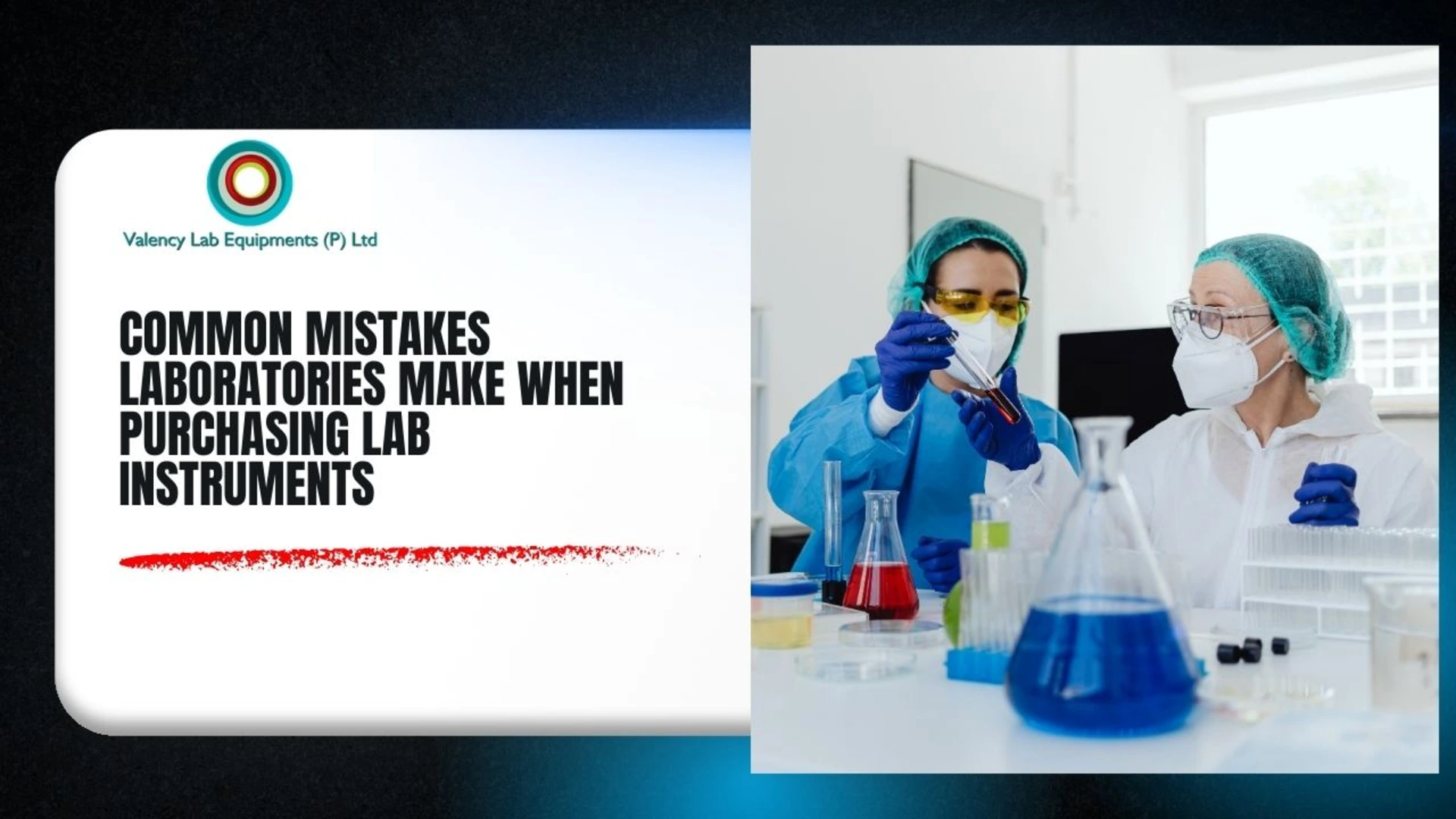
Common Mistakes Laboratories Make When Purchasing Lab Instruments (and How to Avoid Them)
Lab instruments are the backbone of any modern laboratory. From analytical testing to quality control and research, the accuracy, reliability, and longevity of lab instruments directly impact results, compliance, and operational costs. Yet, many laboratories make costly mistakes during procurement that affect performance, scalability, and long-term ROI.
At Valency Lab, we regularly work with research labs, pharmaceutical units, testing facilities, and educational institutions—and we see the same purchasing errors repeated across the industry. This guide highlights the most common mistakes laboratories make when buying lab instruments and how to avoid them with informed decision-making.
1. Focusing Only on Price Instead of Total Cost of Ownership
One of the biggest mistakes laboratories make when purchasing lab instruments is prioritizing the lowest upfront cost. While budget constraints are real, choosing instruments based solely on price often leads to:
- Higher maintenance expenses
- Frequent breakdowns
- Inconsistent results
- Shorter equipment lifespan
Reliable laboratory equipment suppliers emphasize total cost of ownership, which includes installation, calibration, servicing, spare parts, and downtime. Instruments from trusted laboratory equipment manufacturers in India often provide better long-term value despite a higher initial investment.
How to avoid this mistake:
Evaluate service contracts, calibration requirements, energy consumption, and part availability before finalizing any lab instruments purchase.
2. Specification Mismatch with Actual Laboratory Requirements
Another frequent issue is purchasing lab instruments that do not align with real-world applications. This includes over-specifying advanced features that go unused or under-specifying instruments that cannot meet testing demands.
Specification mismatches commonly occur when:
- Instruments are selected without consulting end users
- Future testing needs are ignored
- Sample volume and workflow are underestimated
Experienced laboratory equipment distributors help labs match performance parameters to actual use cases, ensuring accuracy and efficiency.
How to avoid this mistake:
Define application requirements clearly and consult knowledgeable lab equipment suppliers in India before procurement.
3. Ignoring Future Scalability and Expansion Needs
Laboratories evolve. Testing volumes increase, regulations change, and new methodologies are introduced. Buying lab instruments without considering future scalability can result in premature replacement or costly upgrades.
This is especially critical for:
- Pharmaceutical labs
- Chemical laboratories
- Contract testing facilities
Modular science instruments and upgrade-ready lab instruments allow laboratories to scale operations without replacing entire systems.
How to avoid this mistake:
Choose lab instruments that support software upgrades, modular add-ons, and integration with future laboratory equipment.
4. Selecting Vendors Without Evaluating Technical Support
Vendor selection is just as important as instrument selection. Many labs focus on product catalogs but overlook post-sales support, calibration services, and technical expertise.
Unreliable laboratory equipment suppliers can cause:
- Delayed servicing
- Compliance risks
- Extended downtime
Reputable laboratory equipment suppliers in Kolkata and across India offer prompt service, trained engineers, and genuine spare parts.
How to avoid this mistake:
Partner with laboratory equipment stores and distributors that provide documented service capabilities and compliance support.
5. Overlooking Compliance and Documentation Requirements
Lab instruments used in regulated environments must meet ISO, GMP, and GLP requirements. Failure to verify certifications, validation documents, and calibration traceability can lead to audit failures.
Chemical laboratory equipment suppliers should provide:
- Installation qualification (IQ)
- Operational qualification (OQ)
- Calibration certificates
How to avoid this mistake:
Ensure all lab instruments come with complete documentation and meet applicable regulatory standards.
6. Not Considering Compatibility with Lab Materials and Chemicals
Different lab materials and chemical formulations require compatible instrument construction. Ignoring chemical resistance, corrosion protection, and material compatibility can reduce instrument life and compromise safety.
Laboratories sourcing from a trusted lab chemical shop in Kolkata or specialized chemical laboratory equipment suppliers are better positioned to ensure compatibility.
How to avoid this mistake:
Match lab instruments with the chemicals and lab materials they will handle daily.
7. Failing to Use Expert Guidance and Educational Resources
Many laboratories skip supplier consultations and educational resources that could prevent procurement mistakes. Reliable suppliers often publish guides and insights that help labs make better decisions.
You can explore additional procurement insights and best practices here:
- Internal guide section: https://valencylab.com/blogs/
- Chemical sourcing reference: https://valencylab.com/imported-chemicals/
- Routine lab consumables overview: https://valencylab.com/general-laboratory-chemicals/
Conclusion
Purchasing lab instruments is a strategic decision that affects accuracy, compliance, and operational efficiency for years. Avoiding common mistakes—such as focusing only on price, ignoring scalability, or choosing unreliable vendors—can significantly improve laboratory performance.
By working with experienced laboratory equipment suppliers, verified laboratory equipment manufacturers in India, and knowledgeable distributors, laboratories can ensure smarter investments and long-term success. Brands like Valency Lab help laboratories navigate procurement with clarity, technical expertise, and dependable support.
What is the most common mistake when buying lab instruments?
Focusing only on upfront cost instead of long-term performance, maintenance, and compliance support.
Why is vendor selection important for lab instruments?
Vendors provide calibration, servicing, documentation, and technical support critical for uninterrupted lab operations.
How can labs ensure future scalability?
By choosing modular lab instruments that allow upgrades and integration with additional laboratory equipment.
Are certifications important when purchasing lab instruments?
Yes. Certifications ensure compliance with ISO, GMP, and GLP standards and are essential for audits.
Should labs consult suppliers before finalizing purchases?
Absolutely. Experienced laboratory equipment suppliers help avoid specification mismatches and procurement errors.